
Pompeii 79 AD Eruption and Fiorelli's Plaster Cast
experimentNo. 0097categoryHistory & trainingrecordingpendingrunsin browserdataCC BY 4.0
The fly lives through a compressed eruption of Vesuvius in 79 AD in a Pompeii street and atrium house, and dies in the dawn surge with its forelegs drawn up to its face. It becomes a plaster cast when Giuseppe Fiorelli's excavators pour plaster into the hollow it left in the ash in February 1863.
An eight-second loop from the workstation. Full recording pending publication. Follow along for the release. Meanwhile, run it in your browser.
What the fly saw
Frames rendered from the fly’s eye camera at four points in the timeline, each with the 32-column retinal input the connectome model receives at that moment.
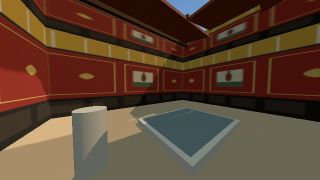
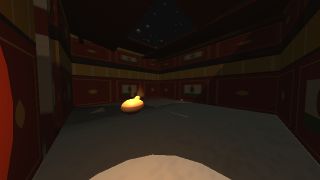

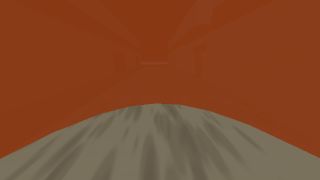

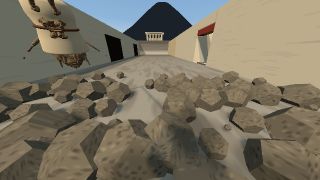
Interactive preview. Run this experiment in your browser with its cameras, the compound-eye inspector, wireframe views and a simulated neural panel. Run in browser
Timeline
13 steps, with their times in the experiment
- 0:00A street in Pompeii
Morning. The fly walks a paved street past stepping stones, cart ruts and a thermopolium counter set with storage jars. Vesuvius stands green above the rooftops.
- 0:12The atrium house
Through the entrance, over a black dog mosaic labelled CAVE CANEM, into the atrium: red and black frescoed walls, the rain pool (impluvium) under the roof opening.
- 0:24The cloud like a pine
About the seventh hour (early afternoon) a cloud rises over the mountain: a tall trunk spreading into branches, white in places, dirty and blotched in others.
- 0:34Pumice falls
The cloud drifts over the town and the sky darkens. Pumice and lapilli rain down, rattle on the tiles and splash into the impluvium. The fly ties a pillow over its head.
- 0:50Darker than any night
Night falls in the afternoon. The fly lights an oil lamp. The pumice keeps falling for hours, filling the atrium and rising up the painted walls.
- 1:04The roofs give way
Under the weight of the pumice the atrium roof collapses: tiles and beams crash into the room. The fly climbs out through the doorway onto the deposit in the street.
- 1:16The long night
The fly picks its way along the street on top of the pumice, now higher than a doorway, lamp in hand, while stones still fall.
- 1:26The surge at dawn
At first light a dense, glowing cloud pours down the mountain and across the plain, hugging the ground like a flood, and rolls into the street.
- 1:38The surge reaches the fly
The hot cloud engulfs the street in seconds. The fly drops to the ground with its forelegs drawn up to its face.
- 1:46Buried in ash
Fine ash settles over the body and hardens. Centuries pass; the body decays and leaves a hollow in the hardened ash.
- 1:541863: Fiorelli’s plaster
February 1863. Excavators under Giuseppe Fiorelli find the hollow, bore through to it and pour liquid plaster into the void.
- 2:08The plaster cast
When the plaster has set, the workers chip the ash away. The cast of the fly emerges in its final pose, forelegs still raised to its face.
- 2:24The cast today
The cast lies in a glass case in the excavated street, the roofless walls around it and Vesuvius behind.
Setup
- 13 seekable stages over 154 seconds: a street in Pompeii; the atrium house; the cloud like a pine; pumice falls; darker than any night; the roofs give way; the long night; the surge at dawn; the surge reaches the fly; buried in ash; 1863: Fiorelli's plaster; the plaster cast; and the cast today.
- At fly scale (one unit is about 1.3 m), a paved street with stepping stones, cart ruts and a thermopolium counter runs north to the forum and the Temple of Jupiter, with the mountain behind. The atrium house has a CAVE CANEM dog mosaic, red and black frescoes, and an impluvium under the compluvium.
- About the seventh hour a cloud rises on a tall trunk and spreads into a canopy. Pumice and lapilli fall, white and then grey. The fly ties a pillow over its head and lights an oil lamp in the afternoon darkness, and when the atrium roof collapses it climbs out onto the deposit (the modeled depths are about 2 m of pumice under about 1 m of ash). At dawn a dark, ground-hugging current with a glowing foot pours down the street.
- Four other citizen flies share the street in 79 AD. In 1863, Giuseppe Fiorelli and three excavators bore into the hardened ash, pour in plaster and chip the ash away; the cast ends in a glass case in the roofless street with Vesuvius behind.
- Controls: Eruption date shown (24 August, from the manuscripts, by default, or 24 October, after the 2018 inscription; only the on-screen date and the grapes change) and Pillow tied over the head (Pliny 6.16; on by default). The scene has no gore controls. There are 8 cameras, including the street north to the forum and Vesuvius, the forum and the cloud, the atrium, the surge arriving, the plaster cast, above the town and the fly's eye.
Measurement
- Retinal-only input: the eye camera's 32 luminance columns reach the fixed connectome model, measured spikes drive the neural display, and no direct stimulation is sent.
- The darkness and the engulfing ash reach the eye as an ash veil around the head, dark and then hot orange, which the viewport replaces with dimmed light and fog; lightning flashes reach both. The pillow, the date captions and the labels are excluded from the eye image.
- After burial the eye sees the inside of the ash, then the excavation once the ash is chipped away; the cast itself is excluded from its own eye. The fly's walk, the eruption and the excavation follow a pre-programmed timeline, and measured spikes do not move the fly.
Limitations
- Pliny the Younger was at Misenum and describes Misenum and Stabiae, not Pompeii. The Pompeii sequence follows volcanology (Sigurdsson et al., 1985), compressed from roughly 18 hours of pumice fall and several surges into about two minutes.
- The date is disputed: the manuscripts of Pliny's letter give 24 August, while the 2018 charcoal inscription and autumn finds point to a later date in October.
- The street, house, forum, temple and mountain profile are approximations at fly scale. The cloud, pumice and surge are stylised, and deposit depths are approximate.
- The fly's death pose is pre-programmed, and there is no burning or gore.


