
Toxcatl: Tezcatlipoca's Impersonator, the Aztec God for a Year
experimentNo. 0098categoryRituals & ceremoniesrecordingpendingdataCC BY 4.0
The fly lives a year as the living image of Tezcatlipoca in Tenochtitlan, as the Florentine Codex (Book 2, chapters 5 and 24) describes the Toxcatl feast: painted black, dressed as the god and followed by eight pages, then given four wives, carried by canoe to a small temple, where it breaks a flute on each step before its heart is offered to the sun and its head is set on the skull rack.
An eight-second loop from the workstation. Full recording pending publication. Follow along for the release.
What the fly saw
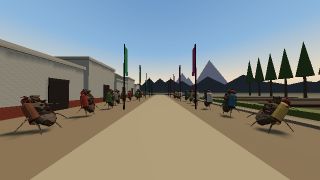
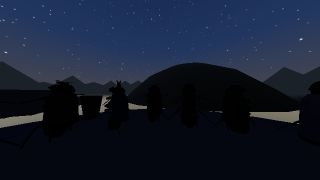
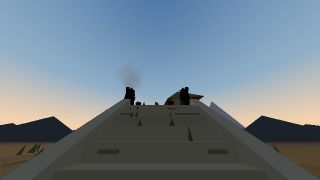
Frames rendered from the fly’s eye camera at four points in the timeline, each with the 32-column retinal input the connectome model receives at that moment.




Timeline
14 steps, with their times in the experiment
- 0:00Chosen without a blemish
In a palace court the stewards line up the captives. The one without any bodily flaw is set apart, and his body and face are painted black.
- 0:10The living image
He is dressed as the god: white down glued to his head, a garland of izquixochitl flowers, gold ear ornaments, a shell lip plug, a white stone on his chest, a netted cape and gold bells on his legs.
- 0:22Flute through the city
He walks the streets day and night playing a clay flute, carrying flowers and a smoking reed. Eight pages in palace dress walk with him. People kneel and kiss the earth as he passes.
- 0:36The year turns
Days and nights run past. The rains come, the maize on the chinampas grows, tassels and is harvested; snow comes and goes on the volcanoes. The feast banners change month by month.
- 0:56Twenty days before
His black dye is washed off and his hair is cut like a captain’s, tied with a feather tassel. Four young women, given the names of four goddesses, become his wives.
- 1:08Five days of feasts
Feasts and dances are held for him on the hillocks in the lake. The torches burn late into the night.
- 1:18The lord’s canoe
At dawn he is put in the lord’s own canoe under its awning, with his wives consoling him, and paddled across the lake toward Tlapitzahuayan.
- 1:34Left at Tlapitzahuayan
At the landing the women and everyone else turn back. Only the eight pages walk with him along the road to a small, poorly kept temple.
- 1:44A flute on every step
He climbs the steps alone. On each step he breaks one of the flutes he played through the year. The pieces fall down the stair.
- 2:00Over the stone
At the top the priests take him and lay him on his back over the stone, holding him by his feet, his hands and his head.
- 2:08The heart to the sun
The flint knife goes into his chest. The priest reaches into the cut, tears out the heart, the pulsing dorsal vessel, and offers it to the sun.
- 2:20Carried down
He is not thrown down the steps like other victims. Four priests carry the body down to the patio.
- 2:30The skull rack
In the patio they cut off his head and spit it on a pole of the tzompantli, among the other heads.
- 2:42The next one
Another captive has already been chosen. He starts down the road playing a flute, his pages behind him.
Setup
- 14 seekable stages over 170 seconds: chosen without a blemish, the living image, flute through the city, the year turns, twenty days before, five days of feasts, the lord's canoe, left at Tlapitzahuayan, a flute on every step, over the stone, the heart to the sun, carried down, the skull rack, and the next one.
- The set is a Tenochtitlan street with a palace court, a canal, chinampas of maize edged with willows, the Templo Mayor's twin shrines and the lake with the Tepepulco hillock; across the water lie the landing at Tlapitzahuayan, the road toward Chalco and a small, poorly kept temple with cracked stucco and weeds on its treads.
- The fly is dressed piece by piece as the codex lists: white down glued to the head, an izquixochitl garland, strings of flowers from shoulder to armpit, gold ear ornaments, a shell lip plug, a white stone on the chest, a small white back bag, a netted cape, a loincloth, gold armbands and bells, and waist-long hair. The year runs as a time-lapse of six day–night cycles, with rain, maize growing and cut, snow on the volcanoes and street banners changing colour for each twenty-day month.
- The cast includes the officiating priest (an articulated fly scaled taller than the rest), six other priests, eight pages, four wives in red, yellow, blue and white, 24 townspeople, eight captives and stewards, four paddlers and the next impersonator.
- Gore (Low / Standard / Extreme, default Extreme) and blood tone (cinematic red or fly hemolymph) are scene controls; the eye camera sees the splatter. Body paint is washed off twenty days before, as the codex says (default), or kept black to the end; Flutes sets the number of temple steps, one flute broken on each (default 13, range 6–20).
- Eight cameras: director, following the impersonator, the heart to the sun, the flute stair, the lord's canoe, Tenochtitlan and the chinampas, the skull rack, and the eye in first person; a replay control jumps to the heart stage.
Measurement
- Retinal-only input: the eye camera's 32 luminance columns reach the fixed connectome model, measured spikes drive the neural display, and no direct stimulation is sent.
- The eye image includes the court, the street ahead, the time-lapse year, the night dancers and braziers, the far shore from the canoe, the stair and the waiting priests, the knife and the heart against the sky, and, from the skull rack, the road and the next impersonator. Costume pieces, the painted display double, the flute in its own forelegs and its severed head are excluded as parts of its own body.
- The host's own lights are switched off while the scene is loaded (restored on unload), so night and dawn are the same in the viewport and the canonical eye.
- The fly's movements, the priests and the rest of the cast follow a pre-programmed timeline; measured spikes do not move the fly.
Limitations
- The street, palace, chinampas and lake geography are approximations; the codex gives no size or number of steps for the small temple, so the default of 13 steps is an estimate.
- A fly's heart is its dorsal vessel, so the pulsing vessel is drawn out through a wound in the thorax.
- The year is compressed into a time-lapse and the five days of hillock feasts into one night; the month banners' colours, the priests' costumes, the sun's position and all timing are approximations, and the red eyes left unpainted are not documented in the cited sources.
- A 16th-century Dominican history calls the impersonator a slave rather than a captive. The codex's account of the wives' sexual role and of the distribution of the flesh is not shown; the wives appear only as companions.
- Gore is deterministic, instanced scene content, not an injury simulation.


