
The Moche Sacrifice Ceremony at Huaca de la Luna, Peru
experimentNo. 0101categoryRituals & ceremoniesrecordingpendingdataCC BY 4.0
The fly is a Moche captive at Huaca de la Luna on Peru's north coast: beaten in ritual combat, stripped, roped at the neck and paraded under the painted façade, it has its throat cut before the warrior priest, who drinks the blood from a goblet, and its body is laid in the rain-softened mud of Plaza 3A.
An eight-second loop from the workstation. Full recording pending publication. Follow along for the release.
What the fly saw
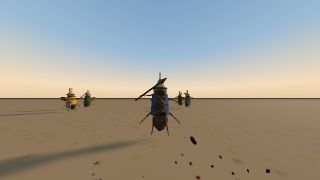
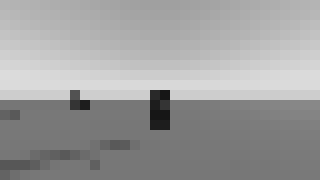
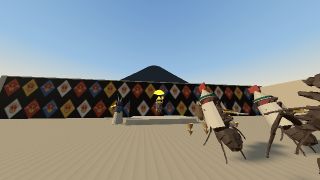
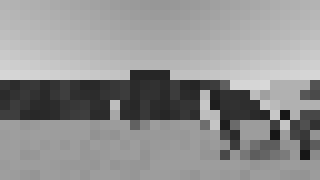
Frames rendered from the fly’s eye camera at four points in the timeline, each with the 32-column retinal input the connectome model receives at that moment.




Timeline
12 steps, with their times in the experiment
- 0:00Below Cerro Blanco
Dawn in the Moche valley. Huaca de la Luna stands at the foot of Cerro Blanco, its seven painted tiers facing the great plaza; Huaca del Sol rises across the plain.
- 0:10Ritual combat
Pairs of warriors in conical helmets fight with clubs and small round shields. The captive’s opponent knocks his helmet off and seizes him by the head.
- 0:26Stripped and roped
The victor strips him of helmet, tunic, ear spools, shield and club, bundles them on the club, and ties a rope around his neck.
- 0:38Paraded
The naked captives are led on ropes along the foot of the painted façade, under a frieze that shows the same procession, and up the ramp.
- 0:52Before the warrior priest
On the upper patio, before a wall of painted decapitator faces, stand the warrior priest in gold, the bird priest and the priestess. The captives kneel in a row.
- 1:04Throats cut
Attendants cut the captives’ throats one after another with crescent knives and catch the blood in goblets held under the wounds.
- 1:16The goblet
The bird priest presents a goblet of blood to the warrior priest. He lifts it in the sun, the gold crescent of his headdress blazing, and drinks.
- 1:28The bodies
The bodies are cut apart: legs taken off at the joints, heads removed and set aside.
- 1:38Rain
Clouds roll in off the sea and heavy rain falls on the desert. Mud runs down the painted walls and floods the plaza.
- 1:50Plaza 3A
Behind the second platform, beside a rock outcrop, the bodies and parts are laid in the soft mud. Unfired clay figures of seated, bound captives are smashed over them.
- 2:04Layer on layer
The sun returns. The mud dries and cracks; fly pupal cases cover the exposed bodies; sand blows over them. Event follows event, layer on layer.
- 2:16The excavation
A section through the plaza shows the strata: more than seventy men in fifteen layers, from at least five events.
Setup
- 12 seekable stages over 146 seconds: below Cerro Blanco, ritual combat, stripped and roped, paraded, before the warrior priest, throats cut, the goblet, the bodies, rain, Plaza 3A, layer on layer, and the excavation.
- Platform I's north façade has seven painted tiers about 75 m long, 3 m a tier, in red, yellow, white, black and blue: warriors leading roped captives, dancers holding a rope, spider decapitators, the decapitator face in diamond frames, fanged fish, crested creatures holding heads and a serpent band, with the figures drawn as flies. A ramp, an upper patio with a wall of decapitator faces, Platform II, Plaza 3A with its rock outcrop and Huaca del Sol across the plain complete the site.
- The warrior priest, an articulated fly, wears a gold crescent headdress, gold nose ornament, gold-and-silver peanut necklace, gold ear spools, gold back flap, blue tunic and a gold sceptre; the bird priest wears an owl headdress, and the priestess two tall plumes and long tassels and holds a gold goblet. Four attendants, four victorious warriors and six warriors in combat complete the cast.
- The closing stages follow the Plaza 3A excavation: unfired clay figures of seated, bound captives smashed over the bodies, fly pupal cases, then sand building up layer on layer until a section shows fifteen strata of bodies under the excavators' grid.
- Gore (Low / Standard / Extreme, default Extreme) and blood tone (cinematic red or fly hemolymph) are scene controls; the eye camera sees the splatter. Rain on Plaza 3A: torrential rain with mud layers (default) or dry season with windblown sand. Captives in the line: 2–6, default 4, the fly among them.
- Eight cameras: director, the painted façade, the goblet and warrior priest, the upper patio, the combat, Plaza 3A, the Moche valley, and the eye in first person; a replay control jumps to the goblet.
Measurement
- Retinal-only input: the eye camera's 32 luminance columns reach the fixed connectome model, measured spikes drive the neural display, and no direct stimulation is sent.
- The eye image includes the opponent, the painted façade during the parade, the warrior priest and the decapitator wall, the attendants and the goblet under its own throat, then, from the severed head, the patio and the rain, and in Plaza 3A the sky until sand covers it. The captive's costume, club, shield and its severed head and legs are excluded.
- The host's lights are switched off while the scene is loaded and restored on unload. The fly's movements and the cast follow a pre-programmed timeline; measured spikes do not move the fly.
Limitations
- The sequence of combat, stripping, roping, throat-cutting and goblet presentation comes from Moche fineline painting, and the regalia from excavated royal and priestess tombs at Sipán and San José de Moro; that the ceremony was performed at Huaca de la Luna, on its upper patio, is a reading, not a documented fact.
- The excavator linked the muddy Plaza 3A deposits to El Niño rains; other researchers caution against that link.
- Façade length, tier heights and frieze order (sources differ), the patio wall, ramp, plaza and Plaza 3A geometry, the outcrop, the numbers of captives and attendants, which bodies were cut apart and all timing are approximations; the friezes are redrawn with fly figures, not copied from a specific panel.
- Every figure, including victims the excavation records as adolescents, is shown as an adult fly.


