
Aztec New Fire Ceremony: The Binding of the Years (Xiuhmolpilli)
experimentNo. 0100categoryRituals & ceremoniesrecordingpendingdataCC BY 4.0
The fly is the captive at the Mexica Binding of the Years, as the Florentine Codex (Book 7, chapters 9–12) describes it: every fire in the Valley of Mexico is put out, priests watch the Pleiades cross the meridian from the Hill of the Star, a new fire is drilled on its chest, and runners carry the flame to the Templo Mayor and town after town.
An eight-second loop from the workstation. Full recording pending publication. Follow along for the release.
What the fly saw
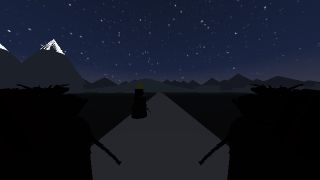
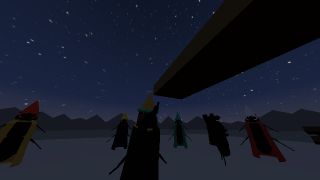
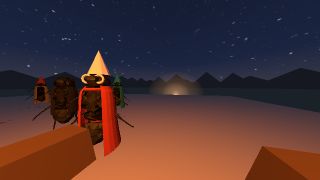
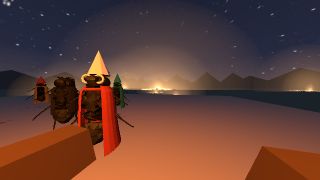
Frames rendered from the fly’s eye camera at four points in the timeline, each with the 32-column retinal input the connectome model receives at that moment.



Timeline
12 steps, with their times in the experiment
- 0:00The last day of the cycle
Sunset at Itztapalapa, below the Hill of the Star. People carry their household images, hearthstones and grinding stones to the canal and throw them into the water.
- 0:10Every fire put out
The hearths are drowned. One by one the fires of the valley go out until it is completely dark. Families climb onto their roofs to wait.
- 0:20Walking like gods
At nightfall the priests, dressed as the gods, walk slowly and silently up the hill. The fire priest carries the drill and tries it as he goes. The captive walks among them.
- 0:34Watching the Pleiades
On the summit temple the priests watch the Pleiades climb toward the middle of the sky. If the stars stop, the sun will not rise again.
- 0:48They pass
The cluster crosses the meridian. The heavens have not stopped; there will be another fifty-two years.
- 0:54Fire on his chest
The captive is laid on his back on the stone. A dry board is set on his chest and the fire priest spins the drill between his palms: smoke, a glowing ember, then flame.
- 1:08The heart into the fire
The flint opens his chest. The heart is thrown into the new fire to feed it, and the body is lifted onto the pyre.
- 1:18The great fire
The pyre roars up on the summit, visible from every shore. On the roofs people cut their ears and flick the blood toward the fire.
- 1:28Runners with pine torches
The fastest runners light pine torches at the pyre and race down the hill in every direction. A line of torches runs out along the causeway.
- 1:44To the great temple
In Tenochtitlan the runner climbs the great temple and sets the fire in the brazier of lime and stone before Huitzilopochtli’s shrine, with copal. From there it goes to the priests’ houses.
- 1:54The valley lights up
Town after town takes the new fire. Bonfires spring up in every ward and on every shore until the whole valley glitters as if it were day.
- 2:12New mats, new clothes
At dawn people put down new mats and new clothes and offer incense to the four directions. The old images lie in the canal.
Setup
- 12 seekable stages over 142 seconds: the last day of the cycle, every fire put out, walking like gods, watching the Pleiades, they pass, fire on his chest, the heart into the fire, the great fire, runners with pine torches, to the great temple, the valley lights up, and new mats, new clothes.
- The Valley of Mexico at night, compressed about fivefold: the Hill of the Star (Huixachtecatl) with a stepped summit temple, Itztapalapa at its north foot, the lakes and causeways, Tenochtitlan with the Templo Mayor and its precinct wall, and sixteen other lakeshore towns under a ring of mountains with the two volcanoes.
- The sky is a star sphere turning about the pole at 19.4 degrees, with the Milky Way and the Pleiades, placed from catalogue positions and drawn about three times their true size.
- The fire priest, who carries and spins the drill, is an articulated fly; eight priests dressed as gods (conical caps, Tlaloc's goggles), two guards, twelve people of Itztapalapa, three women at the hearth and seven runners with pine torches complete the cast.
- Gore (Low / Standard / Extreme, default Extreme) and blood tone (cinematic red or fly hemolymph) are scene controls; the eye camera sees the splatter. The Pleiades cross the meridian (default) or hold just short of it until the end of the stage, then cross; Towns sets how many lakeshore towns take the fire (6–17, default 17); Warming input (VP2) is off by default.
- Eight cameras: director, the summit temple, up at the Pleiades, the fire drill close-up, the valley from above, the great temple, the Itztapalapa rooftops, and the eye in first person; a replay control jumps to the valley lighting up.
Measurement
- By default the input is retinal only: the eye camera's 32 luminance columns reach the fixed connectome model, measured spikes drive the neural display, and no direct stimulation is sent.
- The scene uses the assay backend, allowlisted for retina and warm. With "Warming input (VP2)" switched on (off by default), it requests an optional, bounded drive to the VP2 warming thermosensors only while fire is on the chest: 0 until the drill smokes, rising through the ember to 1.2 at full flame, and 0 again from the moment the chest is opened (checked: 0 at 59 s, 0.34 at 62 s, 1.07 at 66 s, 1.2 at 70 s, 0 at 71 s). Responses report the drive.
- The eye image includes the courtyard and canal, the path in the dark, the star field and the cluster, the priest and the flame on its own chest, the heart, and from the pyre's edge the valley as the fire spreads. The charred body is a display double excluded from the eye, and the host's lights are switched off while the scene is loaded (restored on unload), so the night is equally dark in the viewport and the eye.
- The fly's movements and the cast follow a pre-programmed timeline; measured spikes do not move the fly.
Limitations
- Distances are compressed about fivefold; town positions and sizes, the Templo Mayor's form, the gods' costumes, the runners' routes and timings and the order in which towns light are approximations.
- Excavated remains exist on Cerro de la Estrella, but the summit platform here is generic.
- The Pleiades are drawn about three times their true size and the sky's rotation is compressed; the meridian crossing is placed at midnight, as the codex says. Dawn colours and the night starlight fill are approximations.
- The codex's provisions for pregnant women and children during the night are not shown.
- The optional warming drive is a bounded input to identified thermosensory neurons, not a model of heat transfer or burns.


