
The Sacred Cenote at Chichen Itza: Drought Sacrifice and Dredging
experimentNo. 0104categoryRituals & ceremoniesrecordingpendingdataCC BY 4.0
The fly is thrown alive into the Sacred Cenote at Chichen Itza during a drought, falls 22 m to the green water and sinks among earlier offerings, then lies on the bottom through the centuries until the 1904 dredge brings up its remains; the closing stages show the 1909 helmet dives and the 1960s air-lift.
An eight-second loop from the workstation. Full recording pending publication. Follow along for the release.
What the fly saw
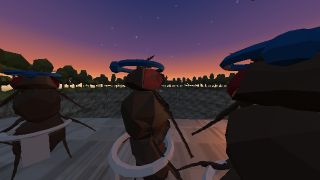
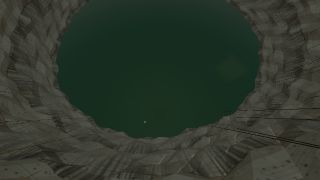
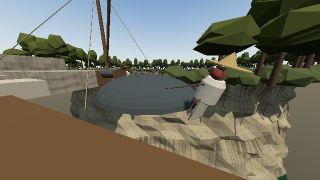
Frames rendered from the fly’s eye camera at four points in the timeline, each with the 32-column retinal input the connectome model receives at that moment.





Timeline
15 steps, with their times in the experiment
- 0:00The rains have failed
Before dawn the maize in the field beside the Castillo stands brown and bent. The lords, who have fasted sixty days without raising their eyes, gather at the foot of its north stair between the stone serpent heads. (1579 report: tradition)
- 0:10The white road north
- 0:26The well of the rain god
The causeway ends at the lip of the cenote: about 60 m across, sheer limestone dropping 22 m to very green water up to 14 m deep. At its mouth a small building holds idols, with a platform at the edge. (The bishop’s account; measurements from a modern survey)
- 0:38Precious things thrown in
The priest feeds copal to the brazier. Assistants throw jade beads, gold discs, balls of blue-painted copal and small blue tripod dishes out over the edge. They fall 22 m and splash. (Archaeology: objects of all these kinds came up from the bottom)
- 0:50Flung down as from a cliff
At break of day four assistants take the first offering by its arms and legs, swing it and fling it out from the platform. It strikes the water, comes up gasping and paddles toward the wall. (1579 report: tradition)
- 1:00Then the subject
The four take the subject by its forelegs and hind legs, lift it off the platform and swing it out over the drop: once, twice, three times.
- 1:08The fall
Released, the subject turns over in the air and drops 22 m in about 2.3 seconds, legs thrashing, and hits the green water flat. A crown of spray rises and falls back. (The bishop’s account: men thrown in alive)
- 1:16Under the green water
The impact drives it a few metres down in a burst of bubbles. It kicks toward the bright disc of the surface, then stops, turns over and sinks through the murk past offerings still drifting down.
- 1:30Among the earlier dead
It settles in blue-grey mud on the slope below the platform among fly skulls, leg bones, jade beads, gold discs and broken blue dishes. Far above, the first offering’s legs kick against the light. (Archaeology: a thick blue layer and many remains lay at the bottom)
- 1:40Midday
The sun stands overhead and shafts of light reach the bottom. If one cries out at noon a rope is let down and it is hauled up the wall; if none does, the lords throw great stones into the water and flee. (1579 report: tradition)
- 1:54Fires and copal
Pulled out half dead, the survivor is laid between fires and perfumed with copal. Head bowed, it says many of its people are below, and they struck its head whenever it looked up; the lords ask whether the year will be good or bad. Later Maya books tell of a captain who went in, came out with the prophecy and was made lord. (Tradition; the captain is legend)
- 2:06Idols into the well
Decades after the conquest a Franciscan friar, later the bishop, finds the small building full of idols. A modern study of the cenote’s pottery argues he threw them into the well himself, about 1558. Then centuries pass: the forest closes over the road and the roof falls in. (Disputed)
- 2:161904: the consul’s dredge
The American consul who owns the hacienda raises a 20-foot pole crane with a 30-foot boom beside the ruined building. A steel orange-peel bucket drops on its cable, bites the bottom mud, closes and is winched up, swung over the rim and opened. Workers search the heap: jade, gold, copal and bones. (Archaeology, 1904–1910)
- 2:321909: helmet divers
From a raft at the water’s edge two Greek sponge divers and the consul climb down in canvas suits and copper helmets, their air pumped by hand from above. On the bottom they work by touch in the dark, feeling through the mud for gold, jade and copper bells. (Archaeology)
- 2:441961 and 1967–68
An air-lift pipe on a floating platform sucks up the bottom; later pumps lower the water nearly 4 m and chemicals clear it. Skulls, long bones, ribs, copal balls and blue dishes come up; one study of these bones counts 22 adult men and 7 adult women. The legend that maidens were thrown in is not borne out. (Archaeology)
Setup
- 15 seekable stages over 176 seconds: the rains have failed, the white road north, the well of the rain god, precious things thrown in, flung down as from a cliff, then the subject, the fall, under the green water, among the earlier dead, midday, fires and copal, idols into the well, 1904: the consul's dredge, 1909: helmet divers, and 1961 and 1967–68.
- The well follows a modern survey: about 59 × 60.5 m across, sheer limestone with hanging roots, and very green water 22 m below the rim and up to 14 m deep. A raised white causeway about 300 m long, crossed in time-lapse, leads from the north stair of the Castillo (nine terraces, four 91-step stairs) to a small platform and building at the south lip.
- The fly and the first offering, an articulated fly, are painted blue under pointed paper caps. The cast includes a priest with a smoking censer, four assistants, four musicians, six lords who fasted sixty days, 14 townspeople, a Franciscan friar (later the bishop), the American consul in a white suit, six workers, two Greek sponge divers who go down with the consul in 1909, and two scuba divers in the 1960s.
- On the bottom, offerings and remains lie in blue-grey sediment: fly skulls, leg bones, jade, gold discs, copper bells, copal and broken blue dishes. Later stages show the 20-foot pole crane, 30-foot boom and steel orange-peel bucket, the hand-pumped helmet dives, and the air-lift platform with the water lowered nearly 4 m.
- Gore (Low / Standard / Extreme, default Extreme) and blood tone (cinematic red or fly hemolymph) are scene controls; the eye camera sees the splatter. The fall: slowed to 0.4× (default) or real time, about 2.3 s. At midday: one cries out and is hauled up by rope (default), or none cries out and great stones are thrown in, the two outcomes of the 1579 report. Source labels (display only) are on by default.
- Eight cameras: director, the well from the rim, the white road and the Castillo, the platform at the lip, the 22 m drop, under the green water, the 1904 crane, bucket and heap, and the fly eye; a replay control jumps to the fall.
Measurement
- Retinal-only input: the eye camera's 32 luminance columns reach the fixed connectome model, measured spikes drive the neural display, and no direct stimulation is sent.
- The eye image includes the road, the well, the rushing water during the fall, the bright surface window from below (murk shells around the eye give the canonical image its underwater haze), the falling stones (in the stones outcome), the descending bucket, the consul's face and finally the well from the finds table; it is dark only inside the closed bucket (about 3 s) and in mud clouds.
- The painted subject seen in the viewport is a display double excluded from the eye, and the source labels never reach it. The fly's movements and the cast follow a pre-programmed timeline; measured spikes do not move the fly.
Limitations
- The rite itself is known from the bishop's secondhand account (written about 1566) and a single 1579 colonial report; the later Maya legend of a captain who came out with the prophecy is told in stage text, not shown, and the popular story of thrown maidens is not borne out by the bones.
- Disputed: that the friar threw the building's idols into the well, an inference from a modern study of the cenote's pottery, and whether the blue layer on the bottom comes from ritual pigment-making.
- Most of the recovered dead were children, followed by adult men; as an agreed exclusion every victim shown is an adult fly, and the 1579 report's women are shown as a single adult first offering.
- Pre-programmed or approximated: the procession and costumes (the blue paint and cap follow the bishop's description of other sacrifices), the time-lapse march, the swing-and-fling, the slowed fall, the subject's drowning and resting place, all gore, the century time-lapse, the compressed dredging (real hauls ran about sixteen a day), the bucket catching the subject's remains, the number of divers and the 1960s platform layout.
Sources
- Chen K'u: The Ceramic of the Sacred Cenote at Chichén Itzá (FAMSI report 97061, 1998)
- Appendix B on the cenote of sacrifice, in a 1933 English translation of the colonial Maya book of Chumayel (sacred-texts.com)
- The 16th-century Relación de las cosas de Yucatán on sacrifices, English translation (sacred-texts.com)
- Sacred Cenote, Wikipedia
- The Sacred Cenote (mayaruins.com)
- Centuries-old Maya blue mystery (Phys.org, 2008)


