
Royal Tombs of Anyang: Shang Human Sacrifice at Xibeigang
experimentNo. 0107categoryRituals & ceremoniesrecordingpendingdataCC BY 4.0
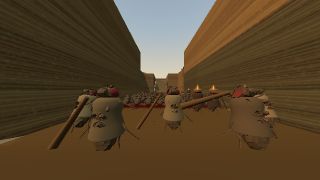
The fly is a bound captive at a late Shang royal burial at Xibeigang, Anyang, about 1200 BC: it watches a diviner crack an oracle bone, kneels with rows of captives on the south ramp of a cross-shaped shaft and is beheaded with a bronze dagger-axe, its eye riding the severed head as the skulls are set out apart from the bodies.
An eight-second loop from the workstation. Full recording pending publication. Follow along for the release.
What the fly saw
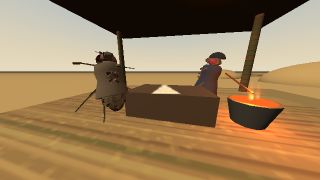
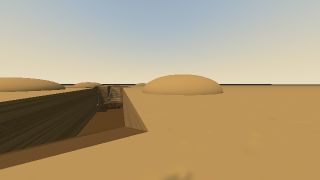
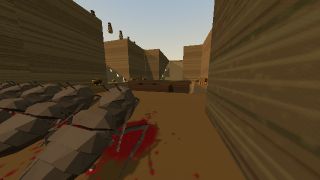
Frames rendered from the fly’s eye camera at four points in the timeline, each with the 32-column retinal input the connectome model receives at that moment.



Timeline
12 steps, with their times in the experiment
- 0:00Heat on the bone
In the diviner’s shelter a cattle shoulder blade lies with its hollows upward. The diviner presses a glowing rod into one hollow; with a sharp crack a forked line splits across the bone.
- 0:12Captives to use
An engraver cuts the record beside the crack: the question, and the number of Qiang captives to “use”. Such bones record captives by the ten and the hundred.
- 0:22The cruciform shaft
At Xibeigang the royal shaft goes more than ten metres down into the loess, with a ramp from each of the four directions. The long south ramp slopes; the others step down.
- 0:34The chamber and the waist pit
At the bottom stands a cross-shaped timber chamber. In a small pit beneath its centre lie an armed guard with his bronze dagger-axe and a dog; more guards and dogs lie in pits at the corners.
- 0:46Bronzes for the dead
Ritual bronzes are set out on the ledge round the chamber: cauldrons on three and four legs, wine goblets and tripod pourers. The lacquered coffin is lowered on ropes.
- 0:56The chariot pit
Beside the tomb a chariot stands in a pit with its wheels in trenches. Both horses are struck down with a mallet and fall on either side of the pole; the charioteer is killed behind the box.
- 1:08Rows of captives
Captives with their forelegs bound behind them are led down the south ramp and made to kneel in rows of ten, facing the chamber.
- 1:20The dagger-axes
Executioners walk the rows with bronze dagger-axes. One blow to the back of each neck: the head drops onto the earth, the body pitches forward after it, and the neck pumps out over the ramp.
- 1:36The last in the row
The subject kneels at the end of the front row. The executioner steps behind it and the blade comes down; the view drops to the ground and rolls.
- 1:44Skulls apart
Workers gather the heads and toss them up the ramp, where they are set out in rows of their own, apart from the bodies, facing the chamber.
- 1:56From above
From the lip of the shaft: the rows of beheaded retainers, the skulls in their own rows, the chariot pit and the guards below. Beside the tomb, small pits each hold ten more headless bodies.
- 2:12Rammed earth
Workers tip baskets of loess over the dead and pound it down in thin layers with wooden rammers.
Setup
- 12 seekable stages over 144 seconds: heat on the bone, captives to use, the cruciform shaft, the chamber and the waist pit, bronzes for the dead, the chariot pit, rows of captives, the dagger-axes, the last in the row, skulls apart, from above, and rammed earth.
- The set is in metres with the flies enlarged to about 1.3 m tall: a cross-shaped shaft about 14 × 19 m at the mouth and 10.5 m deep, after the proportions of tomb M1001 (HPKM 1001), with a long sloping south ramp, stepped north, east and west ramps, banded rammed-earth walls and a second-tier ledge at −8 m.
- On the floor stands a cross-shaped (亞) timber chamber; a waist pit beneath its centre and eight more pits hold dead guards with bronze dagger-axes (ge) and dogs. Ritual bronzes stand on the ledge and floor, the lacquered coffin is lowered on ropes, and a chariot pit beside the tomb holds two horses either side of the pole and a charioteer.
- Captives with bound forelegs kneel in rows of ten facing the chamber while four executioners walk the rows and 30 onlookers stand on the lip; twenty small pits to the east each hold ten headless bodies or a pile of skulls.
- Gore (Low / Standard / Extreme, default Extreme) and blood tone (cinematic red or fly hemolymph) are scene controls; the eye camera sees the splatter. Rows of captives: 2–6 rows of ten, default 5. Sacrificial pits beside the tomb: on by default.
- Eight cameras: director, the diviner's shelter, the cruciform shaft, the rows from the chamber side, from above, the chariot pit, into the chamber, and the fly eye riding the severed head; a replay control jumps to the rows from above.
Measurement
- Retinal-only input: the eye camera's 32 luminance columns reach the fixed connectome model, measured spikes drive the neural display, and no direct stimulation is sent.
- After the cut the canonical eye rides the severed head and rolls with it as it drops and comes to rest; the head copy is excluded, so the eye never sees its own head. From the rows of skulls the eye looks down the ramp at the bodies until the loess fill buries it.
- The fly's movements, the executioners and the rest of the cast follow a pre-programmed timeline; measured spikes do not move the fly.
Limitations
- Which king lay in which tomb is uncertain, and no king is named; about 225 victims are associated with tomb M1001, which was looted.
- Dimensions and counts are simplified: the nine guard pits are distributed round the chamber rather than placed exactly, and the rows of ten sit on the level part of the ramp.
- The order of events, the executioners' technique, the mallet used on the horses and the tossing of the heads are pre-programmed. The record cut beside the crack (貞 用羌三百, "divined: use three hundred Qiang") is shown in modern characters, and its exact text is not documented in the cited sources.
- Excavation in 1976 of 191 pits in the cemetery's eastern section found 1,178 skeletons, many beheaded in groups of about ten, and oracle bones record at least 14,197 victims, many of them Qiang captives; every victim shown is an adult.


