
Plainfield Farmhouse, November 1957: Crime Scene Reconstruction
experimentNo. 0111categoryHistory & trainingrecordingpendingdataCC BY 4.0
The fly takes the place of the sheriff searching a farm a few miles outside Plainfield, Wisconsin, by flashlight and lantern on the night of 16–17 November 1957, in an all-fly reconstruction from 1957 wire reports, later reconstructions of the crime-lab inventory and the sheriff’s account.
An eight-second loop from the workstation. Full recording pending publication. Follow along for the release.
What the fly saw
Frames rendered from the fly’s eye camera at four points in the timeline, each with the 32-column retinal input the connectome model receives at that moment.
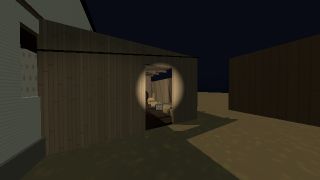

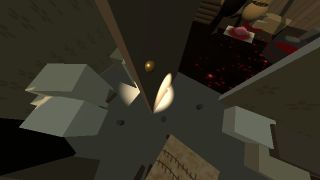
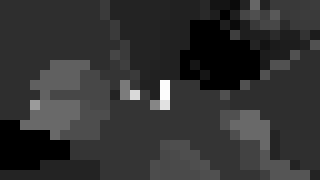
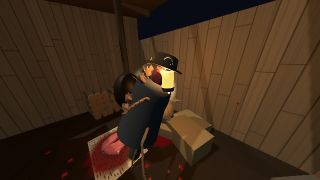


Timeline
12 steps, with their times in the experiment
- 0:00Plainfield, 16 November 1957
Deer season. Dusk over a bare, frozen farm a few miles out of town. The farmer, in a red hunting cap and a plaid jacket, drives out to supper with neighbours.
- 0:10After dark
Squad cars bump into the yard. The white farmhouse is black: it has no electricity. The officers light lanterns and switch on flashlights.
- 0:22The summer kitchen
Two officers push into the shed built onto the back of the house: firewood, junk, a pot-belly stove. A flashlight beam sweeps the rafters.
- 0:34Strung up by the heels
The beam finds a body hanging upside down from a crossbar by the heels, the head gone, opened down the front and dressed out like a deer. “My God, there she is!” One officer runs out.
- 0:50The kitchen
A narrow path through piles of newspapers, cartons, cans and dirty dishes. On the table, a soup bowl cut from the top of a skull. On the stove, the heart in a pan.
- 1:04Chairs, lampshade, wastebasket
Lantern light on chairs whose cane seats have been replaced with skin, a lampshade made of a face, a wastebasket of skin, leggings and a vest of skin.
- 1:16His bedroom
Skulls on the bedposts. Masks made of faces hang on the wall; more lie in a carton. Four noses in a bowl; lips on the window-shade cord.
- 1:30The feed sack
In a burlap sack by the stove: the missing head, with nails through the ears and a loop of twine for hanging it up.
- 1:42The sealed rooms
The officers pry the boards off his mother’s rooms. Inside, everything is as she left it: neat, untouched, under a fine coat of dust.
- 1:54Flood lamps
A portable generator coughs into life and flood lamps light the rooms. Deputies carry out cartons of evidence.
- 2:04Wautoma, 18 November
The farmer, in his cap and jacket and bright red gloves, is led out of the county jail past the photographers’ flashbulbs.
- 2:1620 March 1958
A glow over the farm before dawn. The farmhouse burns to the ground; the volunteer fire department cannot save it. The cause was never settled.
Setup
- Twelve seekable stages over 150 seconds: dusk on 16 November 1957, the squad cars after dark, the summer kitchen, the body strung up by the heels, the kitchen, chairs, lampshade and wastebasket, his bedroom, the feed sack, the sealed rooms, the flood lamps, the county jail at Wautoma on 18 November, and the fire of 20 March 1958.
- The house had no electricity, so the search is lit by flashlights and a lantern until a generator and flood lamps arrive. The night is dry with bare ground; snow, recorded on 18 November, falls only at the jail.
- Items are placed as the reports list them, from the body hanging from a crossbar in the shed built onto the back of the house, through the kitchen and the bedroom’s skulls and masks, to the head in a burlap feed sack by the shed stove; the mother’s boarded-up rooms are neat and dusty.
- Every person is a fly: the farmer in a red hunting cap and plaid jacket, six deputies (three searchers, two carrying cartons and one at the jail), three photographers with flashbulbs and three volunteer firemen.
- Gore (Low / Standard / Extreme, default Extreme) and blood tone (cinematic red or fly hemolymph) are scene controls; the eye camera sees the splatter. Flashlight beams shows dusty-air cones by default (display only) or light only, Inventory tags are on by default and display only, and a replay control returns to the summer kitchen.
- Eight cameras: Director (auto), the farmyard and the squad cars, the summer kitchen and the crossbar, the kitchen, his bedroom, her rooms, the jail steps, and the sheriff’s eyes.
Measurement
- Retinal-only input: the eye camera’s 32 luminance columns reach the fixed connectome model, measured spikes drive the neural display, and no direct stimulation is sent.
- The flashlights, lantern, flood lamps, flashbulbs and fire are scene lights, so the eye sees what they light; the beam cones, the tags and the sheriff’s own costume and flashlight are excluded from the eye image. A sky dome (dusk, night, a grey day, fire glow) is world content, and the eye range is raised to 100 m while the scene is mounted.
- The fly’s movements and the cast follow a pre-programmed timeline; measured spikes do not move the fly.
Limitations
- Accounts differ on how the body was hung, who found it, where the heart was found, how many masks there were (9, 10 or about 12), whether there were two or four bedpost skulls, which rooms were sealed and where the head was; the scene follows the earliest reports, and the heart’s tag says that reports differ.
- Sexual items in the inventory are left out, and a skin garment is shown as a plain vest without anatomical detail.
- The red hunting cap and plaid jacket are the identifying costume; 1957 photographs are black and white and show a cap and a jacket, and the wire report records bright red gloves.
- The farm layout, room plan, junk piles, barn, jail facade, flood lamps, cars and all timing are approximations. The killing itself is not shown.
Sources
No external sources are cited for this experiment.


