
Miller’s Court, Whitechapel 1888: Crime Scene Reconstruction
experimentNo. 0113categoryHistory & trainingrecordingpendingdataCC BY 4.0
The fly is the tenant of Room 13, Miller’s Court, in an all-fly reconstruction of the Whitechapel murders of autumn 1888 that ends with the room on 9 November as the police surgeon’s post-mortem notes, the inquest and the police photograph record it.
An eight-second loop from the workstation. Full recording pending publication. Follow along for the release.
What the fly saw
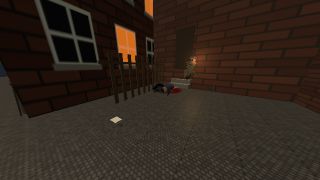
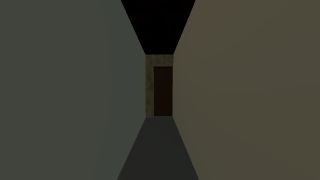
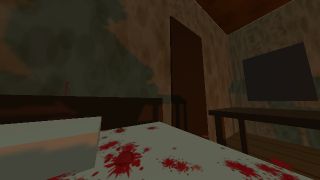
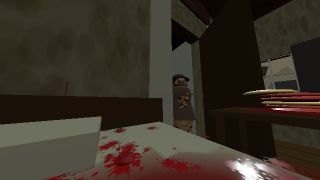
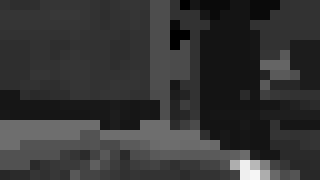
Frames rendered from the fly’s eye camera at four points in the timeline, each with the 32-column retinal input the connectome model receives at that moment.


Timeline
13 steps, with their times in the experiment
- 0:00Spitalfields, autumn 1888
Fog in Commercial Street. Gas lamps, the white spire of Christ Church over the market, women walking the pavements late at night.
- 0:10Buck’s Row, 31 August
Before dawn a carman on his way to work finds a woman on her back in front of a stable-yard gateway. Her throat has been cut back to the spine and her abdomen slashed open.
- 0:2029 Hanbury Street, 8 September
In a back yard, between the steps and the fence, a woman lies with her throat cut and her intestines lifted over her right shoulder. Her few possessions are laid out at her feet. Neighbours charge a penny to view the yard from their windows.
- 0:30Dutfield’s Yard, 30 September
A pony shies at the gateway of the yard beside a working men’s club. A woman lies on her side, throat cut, a packet of cachous still in her hand.
- 0:38Mitre Square, 30 September
Forty-five minutes later a constable’s lantern finds another in the square’s darkest corner: face cut, intestines thrown over the right shoulder.
- 0:48Dorset Street, 9 November
Past the church and into Dorset Street. Between numbers 26 and 27 a narrow arched passage leads into Miller’s Court. The key is lost: the door of No. 13 is unbolted by reaching through a broken window pane.
- 1:00Number 13
One room about twelve feet square: a bed against the wooden partition, a small table beside it, a fireplace opposite with a print above, two windows on the court, the one by the door broken and stuffed with rags, a coat hung over it for a curtain.
- 1:12“Oh, murder!”
Toward four in the morning a faint cry is heard from the court and ignored. A man’s shadow moves on the partition. The throat is cut on the right side of the bed: blood strikes the partition in separate splashes and soaks the corner of the bedding.
- 1:22Clothes in the grate
The fire is fed with clothing until it roars. By its light the body is moved to the middle of the bed and the cutting goes on for a long time; the kettle on the grate begins to melt.
- 1:34Through the broken pane
At a quarter to eleven the landlord’s man comes for the rent. Getting no answer, he reaches through the broken pane, pulls the coat aside and looks in: first two lumps of flesh on the bedside table, then the bed.
- 1:46The door forced
At half past one the landlord breaks the door open with a pickaxe. It swings in and knocks against the table beside the bed.
- 1:54As found
The body lies in the middle of the bed, the face hacked beyond recognition and turned on its left cheek, the throat cut through to the spine, the abdomen emptied. The kidneys lie under the head, the liver between the feet, the intestines by the right side, the spleen by the left; the flesh of the abdomen and thighs is heaped on the table. The heart is missing.
- 2:12The kettle
In the grate, burnt cloth and the brim of a hat. The fire was hot enough to melt the solder: the spout has dropped off the kettle.
Setup
- Thirteen seekable stages over 140 seconds: Spitalfields in autumn 1888, Buck’s Row (31 August), 29 Hanbury Street (8 September), Dutfield’s Yard and Mitre Square (both 30 September), Dorset Street on 9 November, Number 13, the cry toward four in the morning, clothes in the grate, through the broken pane at a quarter to eleven, the door forced at half past one, the room as found, and the kettle.
- Four night vignettes show each earlier site with the body as found, the person who found it and onlookers, in fog under gas lamps; the Earlier sites control (on by default) hides them.
- Room 13 is about 12 ft square: the bed along the wooden partition, the bedside table, the fireplace opposite the door, two windows on the court (the one by the door broken, stuffed with rags and curtained with a coat), a second table, a chair and a cupboard. The as-found stage arranges the body, organs and blood as the post-mortem notes, inquest and photograph record them, seen from the police photographer’s position.
- The killer, never identified, is only a hatted shadow. The landlord’s man, the landlord with a pickaxe, the inspector, the police surgeon, four finders (a carman, a lodger, the club steward and a constable with a lantern) and 14 onlookers are flies.
- Gore (Low / Standard / Extreme, default Extreme) and blood tone (cinematic red or fly hemolymph) are scene controls; the eye camera sees the splatter. London fog (thick by default, or light) is display haze only, and a replay control returns to the room as found.
- Eight cameras: Director (auto), Dorset Street at night, Miller’s Court, through the broken pane, the police photograph, the room from the fireplace, the grate and the kettle, and the fly’s eye.
Measurement
- Retinal-only input: the eye camera’s 32 luminance columns reach the fixed connectome model, measured spikes drive the neural display, and no direct stimulation is sent.
- The organs, blood and room reach the eye image; the wound overlays on the fly’s own body segments are excluded, since the eye never sees its own body, and the canonical eye keeps its own fog whatever the London fog setting. After death the eye looks from the head, turned on its left cheek, along the pillow toward the table and the door.
- The fly’s movements and the cast follow a pre-programmed timeline; measured spikes do not move the fly.
Limitations
- Anatomy is mapped onto a fly (head capsule, neck joint, abdomen, legs and thorax) with deterministic overlays and separate organ meshes; items in the post-mortem notes covered by the scene’s content exclusions are left out, and there is no sexualised posing.
- The room plan is reconstructed so that the post-mortem notes’ “right side”, the inquest’s “top right-hand corner” nearest the partition and the door striking the table all hold; it may be mirrored relative to the real room.
- The killer was never identified, and a disputed sighting of a man with the tenant that night is not shown.
- The earlier sites are condensed, and their architecture, the onlookers, the tenant’s movements and all timing are approximations.
Sources
No external sources are cited for this experiment.


