
Our American Cousin, 14 April 1865: State Box Reconstruction
experimentNo. 0116categoryHistory & trainingrecordingpendingdataCC BY 4.0
The fly is the president in the state box during the third act of Our American Cousin, at the playhouse on 10th Street, Washington, at about 10:15 pm on 14 April 1865, in an all-fly reconstruction that follows him to the boarding house opposite, where he dies at 7:22 am on 15 April.
An eight-second loop from the workstation. Full recording pending publication. Follow along for the release.
What the fly saw
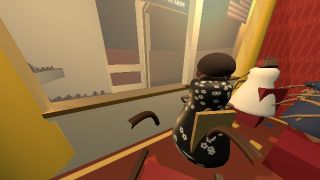
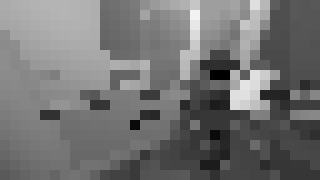
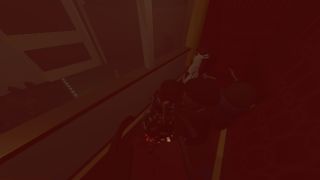
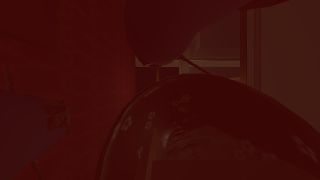
Frames rendered from the fly’s eye camera at four points in the timeline, each with the 32-column retinal input the connectome model receives at that moment.



Timeline
13 steps, with their times in the experiment
- 0:00Ford’s Theatre, 10:10 pm
Gaslight over a full house of about 1,700. On stage, the third act of the comedy. Above the stage on the right hangs the state box, draped in flags, a framed portrait of the first president on its centre post.
- 0:10The state box
The president rocks gently in a red damask rocking chair at the back corner of the box, his hat on the floor beside him; the first lady sits at his right, the major and his fiancée nearer the stage. The guard’s chair in the passage is empty.
- 0:18The barred door
The actor with the black moustache climbs to the dress circle, slips through the door into the narrow passage behind the box and wedges a wooden bar between the door and the wall.
- 0:28The laugh line
Alone on the stage, the comic actor turns on the departing matron: “Don’t know the manners of good society, eh? Well, I guess I know enough to turn you inside out, old gal — you sockdologizing old man-trap.” The house roars.
- 0:35The shot
Under the laughter the door behind the president opens. From less than two feet the single-shot derringer fires into the back of his head, behind the left ear. He slumps in the rocker; smoke fills the box.
- 0:41The major
The major springs at the gunman, who drops the pistol and slashes him with a knife, laying open his left arm between elbow and shoulder. Blood pours over the box and his fiancée’s white dress.
- 0:47The leap
The gunman vaults the balustrade. His spur catches the Treasury Guards flag, tearing it, and flips the framed portrait; he drops about twelve feet and lands hard on the stage, breaking his left leg above the ankle.
- 0:55On the stage
He rises, raises the knife to the audience and shouts — accounts differ on the words — then limps across the stage toward the wings.
- 1:01The back door
Past the startled actors and out of the rear door into the alley, where a boy holds a bay mare. He knocks the boy down, mounts and rides off into the dark.
- 1:09The surgeon
A young army surgeon reaches the box. The president is laid on the floor; the surgeon finds the wound behind the left ear and lifts the clot away with his finger, and the breathing eases. An actress cradles the head in her lap.
- 1:19Across 10th Street
Soldiers carry him out of the theatre, the surgeon holding the head, across the muddy street toward a boarding house where a man with a candle beckons from the steps.
- 1:29The back bedroom
In a small back bedroom he is laid diagonally across a bed too short for him. The pillows soak through with blood. Surgeons, officials and family keep watch through the night by gaslight.
- 1:417:22 am
Grey morning at the window, 15 April. The laboured breathing slows and stops at 7:22. The room stands silent around the bed.
Setup
- Thirteen seekable stages over 111 seconds: the full house at 10:10 pm, the state box, the barred door, the laugh line, the shot, the major, the leap, on the stage, the back door, the surgeon, the carry across 10th Street, the back bedroom, and 7:22 am.
- Dimensions follow National Park Service research and the 1960s restoration reports: the house about 66.5 ft wide, a 17 ft deep forestage, a 38 ft proscenium, a state box about 16 ft across and 6 ft deep whose balustrade is about 12 ft 8 in above the stage, and a back bedroom of 9.5 × 17 ft.
- The box is draped with four US flags, the blue Treasury Guards flag and a framed portrait of the first president on the centre post; the president sits in a red damask rocker in the back corner, the first lady at his right, the major and his fiancée nearer the stage, and the guard’s chair in the passage is empty.
- Every person is a fly identified by role and clothing: the president (chin-curtain beard, frock coat, silk top hat, drawn about 12% taller than the others), the first lady, the major, his fiancée in white, the gunman with the black moustache, the comic actor and the departing matron, the actress who cradles the head, the young army surgeon, the man with the candle, the boy with the horse, four soldiers, four watchers at the deathbed and about 300 seated audience figures.
- Slow motion at the shot and the leap is on by default; off, the fall from the box plays at real speed, under a second. Gore (Low / Standard / Extreme, default Extreme) and blood tone (cinematic red or fly hemolymph) are scene controls; the eye camera sees the splatter. A replay control returns to the shot and the leap.
- Eight cameras: Director (auto), the house from the parquet, inside the state box, from the stage looking up at the box, Baptist Alley and the horse, 10th Street, the back bedroom, and the fly’s eye.
Measurement
- Retinal-only input: the eye camera’s 32 luminance columns reach the fixed connectome model, measured spikes drive the neural display, and no direct stimulation is sent.
- The eye watches the stage over the first lady’s shoulder; after the shot the eyes are closed, so the eye sees only dim red light through the lids, brightening under the box chandelier, the bedroom gaslight and the dawn. The president’s own beard and clothes are excluded from the eye image.
- The fly’s movements and the cast follow a pre-programmed timeline; measured spikes do not move the fly.
Limitations
- Disputed or unrecorded: the words shouted on the stage (shown without words), whether the guard returned, the peephole, the first lady’s dress, where the hat was in the box (he wears it until the shot, so he reads at a distance) and whether the ball came to rest near the right or the left eye. Words reported at the deathbed are left out because their wording is disputed.
- The volume of the house, the balconies, the audience (about 300 seated figures for about 1,700), the set of the play, the street, the façades and the alley are approximations, and the carry is cut from the box to the front door.
- The backspatter at the shot and the volume of the major’s bleeding are modeled at the chosen gore level; the record has no exit wound, and the head bled steadily.
Sources
No external sources are cited for this experiment.


