
92 Second Street, Fall River 1892: Crime Scene Reconstruction
experimentNo. 0115categoryHistory & trainingrecordingpendingdataCC BY 4.0
The fly is the maid at 92 Second Street, Fall River, Massachusetts, on 4 August 1892, in an all-fly reconstruction from the 1893 trial transcript, the autopsy notes and an 1893 newspaper account, in which the attacker is a featureless shadow.
An eight-second loop from the workstation. Full recording pending publication. Follow along for the release.
What the fly saw
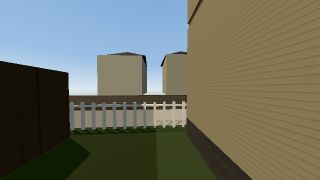
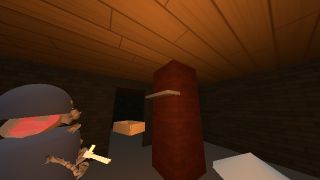
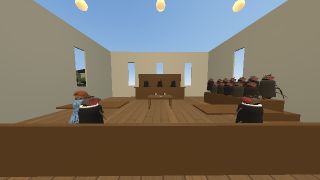
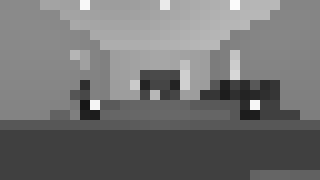
Frames rendered from the fly’s eye camera at four points in the timeline, each with the 32-column retinal input the connectome model receives at that moment.




Timeline
13 steps, with their times in the experiment
- 0:00Second Street, 4 August 1892
A hot Thursday morning. The father, in a black suit and white chin whiskers, walks downtown. The maid, sick with a headache, carries a pail and a long-handled brush out of the side door.
- 0:10Washing the windows
The stepmother wants the windows washed inside and out. The maid starts with the two sitting-room windows on the south side, dipping the brush in the pail.
- 0:22The guest room, about 9:30
Upstairs, the stepmother is making the bed. A shadow comes in. The first blow lands above her left ear; she falls face down between the bed and the dressing case, and the rest come from above. Below, the maid washes the front windows.
- 0:38Home at 10:45
The father comes home to a front door locked three ways. The maid unbolts it and says “pshaw”. From the top of the stairs, the daughter laughs.
- 0:48The sofa
He lies down on the sitting-room sofa on his right side, his head on a cushion on his folded coat, his boots on the floor. The maid climbs the back stairs to her attic room. The City Hall bell strikes eleven.
- 0:58Ten blows
The shadow stands at the head of the sofa and strikes down at the left side of his face, ten or eleven times. One blow cuts the eye in half. Blood fans across the wall, the picture above the sofa and the parlor door.
- 1:12Come down quick
The daughter calls up the back stairs: “Come down quick; father’s dead: somebody come in and killed him.” The maid runs across the street for the doctor.
- 1:22From the stairs
The neighbour and the maid start up the front stairs. Halfway up, at the level of the guest-room floor, they see her under the bed. The doctor and the first officers arrive.
- 1:34The handleless hatchet
In the middle cellar an officer lifts a box down from the chimney ledge. Among old tools lies a hatchet head coated in white ash, a stub of handle freshly broken off in its eye.
- 1:46The barn loft
Her account: up in the hot loft, eating three pears at the window, looking for lead to make sinkers. An officer climbs up and finds the dusty floor with no footprints but his own.
- 1:58Sunday: the dress
Sunday morning in the kitchen she puts a cheap light-blue cotton dress into the stove: “I am going to burn this old thing up; it is covered with paint.”
- 2:08New Bedford, 20 June 1893
Superior Court at New Bedford. The two skulls go to the jury room with the jury. They are out a little over an hour. Not guilty.
- 2:22Forty whacks
The skipping rhyme says forty and forty-one. The autopsy counted eighteen head wounds and one in the back on the stepmother, and ten or eleven on the father.
Setup
- Thirteen seekable stages over 154 seconds: Second Street on the morning of 4 August 1892, washing the windows, the guest room at about 9:30, home at 10:45, the sofa, ten blows, the call up the back stairs, the view from the front stairs, the handleless hatchet in the cellar, the barn loft, the dress burned on Sunday, the verdict at New Bedford on 20 June 1893, and the skipping rhyme set against the autopsy counts.
- Rooms follow trial testimony: the guest room with the gap between the bed and the dressing case, the sitting-room sofa where the father lies on his right side, the front door locked three ways, the chimney ledge in the middle cellar, and the barn loft whose dust shows only one officer’s footprints.
- The scene shows 19 blows in the guest room (18 to the head and one in the back) and 11 at the sofa, matching the autopsy totals; blood positions follow testimony, including the arc of 86 spots behind the sofa and 40 on the picture above it.
- Every person is a fly: the father in a black suit and white chin whiskers, the stepmother, the daughter, the neighbour, the doctor, two officers, the daughter’s friend, three judges, the prosecutor and defence counsel, a jury of twelve and 28 in the gallery.
- Gore (Low / Standard / Extreme, default Extreme) and blood tone (cinematic red or fly hemolymph) are scene controls; the eye camera sees the splatter. Attacker shows a shadow figure by default or, set to unseen, only the hatchet; Blow tally is on by default and display only; a replay control returns to the sofa.
- Nine cameras: Director (auto), Second Street and the house front, the guest room along the gap between the bed and the dressing case, the sitting room and the sofa, the view from the stairs under the bed, the middle cellar, the barn loft, the courtroom, and the maid’s eyes.
Measurement
- Retinal-only input: the eye camera’s 32 luminance columns reach the fixed connectome model, measured spikes drive the neural display, and no direct stimulation is sent.
- The blow tally, the rhyme cards and the maid’s own clothes, brush and pail are excluded from the eye image; a summer sky dome is world content, so the eye sees daylight, and the eye range is raised to 90 m while the scene is mounted.
- The fly’s movements and the cast follow a pre-programmed timeline; measured spikes do not move the fly.
Limitations
- The attacker is deliberately a featureless shadow: the jury acquitted the only person tried, nobody else was ever charged, and neither Attacker setting identifies anyone.
- Counts differ by source: one witness counted 22 marks on the stepmother, including three bruises from the fall, and another gave 11 on the day; the father’s autopsy count is 10 cuts plus one crushing blow. The splatter uses the shared deterministic gore kit, not a fluid model.
- Measured highs that day were about 78–83 °F; “over 100 °F” is folklore. The transcript puts the jury’s deliberation at about 68 minutes (3:24–4:32 pm), against a popular figure of about 90.
- The rhyme’s origin is undocumented, and it is not presented as fact. The plan follows testimony, not a survey; ceiling heights, furniture, colours, the barn’s position, the courtroom, the officers’ helmets and the timing within each stage are approximations.
Sources
No external sources are cited for this experiment.


