
Egyptian Mummification: Herodotus's Three Grades of Embalming
experimentNo. 0091categoryHistory & trainingrecordingpendingdataCC BY 4.0
The fly is the dead body in an Egyptian embalmers' workshop, prepared in one of the three price grades of embalming that Herodotus describes in Histories 2.86–88. In the costliest grade the brain is drawn out through the nose with an iron hook, the gut is removed through a cut in the flank, and the body spends seventy days in natron before it is wrapped in gummed linen and shut in a fly-shaped wooden case.
An eight-second loop from the workstation. Full recording pending publication. Follow along for the release.
What the fly saw
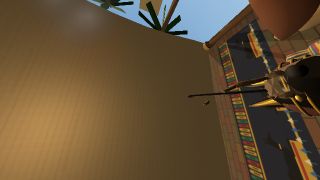
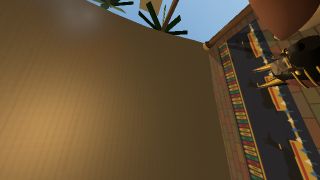
Frames rendered from the fly’s eye camera at four points in the timeline, each with the 32-column retinal input the connectome model receives at that moment.






Timeline
10 steps, with their times in the experiment
- 0:00Into the wabet
Two bearers carry the dead fly on a bier into the embalmers’ workshop and lay it on its back on the lion-legged table, beside heaps of white natron.
- 0:10Three painted models
The embalmers show the family three wooden models of a corpse, painted to look real. The model for the chosen grade is lit: the costliest, the second or the cheapest.
- 0:20Out through the nose
First grade: the masked embalmer works an iron hook up the nostril and draws the brain out in long strands, then pours in drugs to rinse out the rest. Second grade: syringes of cedar oil go in through the anus and the opening is stopped. Third grade: the belly is cleansed out with a purge.
- 0:42The Ethiopian stone
First grade: the cutter slits the flank with a sharp Ethiopian stone, and hemolymph runs onto the table. The lower grades are not cut; the assistants bring natron.
- 0:52The intestines
First grade: the whole gut is drawn out through the cut and the organs go into four canopic jars (the jars and the four sons of Horus are archaeology, not Herodotus).
- 1:06Palm wine and spices
First grade: the cavity is rinsed with palm wine and pounded spices, packed with ground myrrh, cassia and other spices (but not frankincense), and sewn up.
- 1:18Seventy days in natron
The body is buried in natron for seventy days, the limit Herodotus gives. It dries, darkens and shrinks.
- 1:34Out of the natron
The natron is brushed away. Second grade: the cedar oil is let out and brings the dissolved gut with it; the natron has eaten the flesh, leaving (says Herodotus) only skin and bones. First grade: the body is washed.
- 1:44Gummed linen
First grade: assistants wrap the whole body in strips of fine linen smeared with gum, from the feet to the head. Lower grades: the body is given back to the family as it is.
- 2:06The wooden figure
First grade: the family shut the mummy in a hollow wooden case shaped like the dead (here, a fly) and stand it upright against the wall. Lower grades: the bearers carry the body away.
Setup
- 10 seekable stages over 140 seconds: into the wabet; three painted models; out through the nose; the Ethiopian stone; the intestines; palm wine and spices; seventy days in natron; out of the natron; gummed linen; and the wooden case.
- An open-sided embalmers' workshop (a per-nefer or wabet) with a sunlit linen canopy, mudbrick walls, a painted frieze, a lion-legged embalming table, heaps and baskets of natron, palm-wine jars, linen rolls, a resin brazier, three painted model corpses and four canopic jars.
- Cast: five cast flies, namely the chief embalmer in a jackal (Anubis) mask, the cutter, two assistants who also carry the bier, and a relative.
- Price grade: First (default) uses the hook, a flank cut with a black stone blade, the organs in four canopic jars, palm wine, myrrh and cassia, natron with a day counter to 70, thirty gummed linen bands and a long strip, and the case stood upright against the wall. Second injects cedar oil and lets it out with the dissolved gut after the natron. Third uses a purge and natron. Gore (Low / Standard / Extreme, default Extreme) and blood tone (cinematic red or fly hemolymph) are scene controls, and the eye camera sees the splatter.
- In the first grade the brain comes out as long coloured strands drawn from real reconstructed MaleCNS neuron morphologies (FlyEM / HHMI Janelia, CC BY 4.0), or as procedural strands when no copy is reachable.
- 7 cameras, including a director view that follows the procedure, the iron hook in close-up, the table from above, the canopic jars, the wooden case and the dead fly's eye, which rolls with the supine body.
Measurement
- Retinal-only input: the eye camera's 32 luminance columns reach the fixed connectome model, measured spikes drive the neural display, and no direct stimulation is sent.
- The supine eye looks up at the canopy, the masked embalmer and the hook until the linen, and then the closed case, cover it. The brain strands, labels, the day counter and the dried body are excluded from the eye image.
- The strands are display-only and never show the live neural state. The body and the male CNS are different specimens, and the brain is scaled and placed approximately inside the head.
- The embalmers' work and the day–night light sweep follow a pre-programmed timeline; measured spikes do not move the fly.
Limitations
- From Herodotus: the three grades and their prices, the painted models, the iron hook and the drugs, the Ethiopian stone, palm wine, myrrh, cassia and other spices except frankincense, the sewing up, seventy days of natron as the limit, the cedar-oil injection and its draining, the purge, gummed strips of fine linen, and the man-shaped wooden case stood upright against a wall.
- Not from Herodotus, and labelled in the scene: the canopic jars, the four sons of Horus and the jackal-masked embalmer, which come from archaeology. The lion-legged table follows surviving embalming tables; the bier, the workshop layout and the order of organs are approximations.
- Seventy days in natron are compressed into one 16-second stage. Diodorus 1.91's account of stones thrown at the cutter is not shown.
- The case is shaped like the dead (here, a fly with red compound eyes on a gold face); its painted signs are decorative, not text.


