
Execution of Damiens, 1757: Quartered by Six Horses
experimentNo. 0095categoryHistory & trainingrecordingpendingdataCC BY 4.0
The fly takes the place of Robert-François Damiens in his documented execution of 28 March 1757: the amende honorable before Notre-Dame, then sulphur, red-hot pincers and poured lead on the Place de Grève, and a quartering that needed six horses instead of four. The scene follows the sentence and trial record and the Gazette d'Amsterdam and Bouton accounts quoted at the opening of Michel Foucault's Discipline and Punish.
An eight-second loop from the workstation. Full recording pending publication. Follow along for the release.
What the fly saw
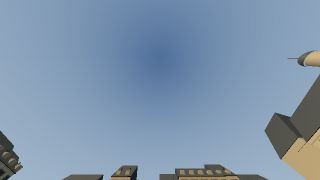
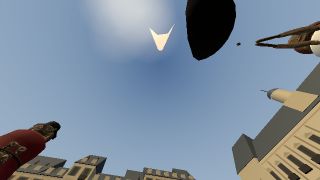
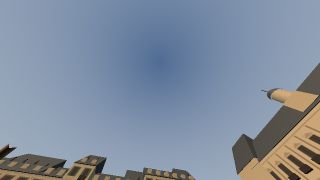
Frames rendered from the fly’s eye camera at four points in the timeline, each with the 32-column retinal input the connectome model receives at that moment.



Timeline
13 steps, with their times in the experiment
- 0:00Amende honorable at Notre-Dame
Before the main door of Notre-Dame the fly kneels in a plain shirt, holding a burning two-pound wax torch, as the sentence ordered.
- 0:12The cart reaches the Place de Grève
The tumbrel rolls into the packed square below the Hôtel de Ville. Every window and roof ridge is full of spectators.
- 0:22Bound on the scaffold
The executioners lay the fly on its back on the low scaffold, belt it down with iron bands and tie ropes to its legs.
- 0:32The knife hand is burned with sulphur
The right foreleg, still gripping the penknife, is held in a brazier of burning sulphur. The flame is pale blue and weak, as Bouton reported.
- 0:44Red-hot pincers
An executioner with rolled-up sleeves tears at the breast, arms, thighs and calves with glowing pincers, twisting at the same spot two or three times.
- 1:00Lead, oil, resin, wax and sulphur
A ladle pours molten lead, boiling oil, burning resin, wax and sulphur into the wounds. Each pour spits steam and flame.
- 1:14Four horses pull
Horses are harnessed to the fore and hind legs. Whips crack, the horses lunge again and again, and the limbs hold.
- 1:28Instead of four, six
“Instead of four, six were needed”: two more horses are hitched to the middle legs. Six horses strain at full stretch in a star around the scaffold.
- 1:42Samson cuts the sinews
The horses still fail. The executioner Samson takes a knife and cuts the sinews and hacks at the joints of the hind legs.
- 1:52The limbs come away
One by one the horses lurch free, each dragging a leg across the enclosure: right hind first, then left hind, the forelegs, and the middle legs.
- 2:10Still moving
Two confessors climb to the scaffold. The executioner waves them away as if the fly were dead, but its mouthparts still move from side to side.
- 2:18The pyre
The trunk and the six legs are thrown on the woodpile beside the scaffold. The fire takes hold as the light fails.
- 2:34Ashes to the wind
Late at night the last pieces are still burning in the embers. The ashes drift away over the square.
Setup
- 13 seekable stages over 164 seconds: amende honorable at Notre-Dame; the cart reaches the Place de Grève; bound on the scaffold; the knife hand is burned with sulphur; red-hot pincers; lead, oil, resin, wax and sulphur; four horses pull; instead of four, six; Samson cuts the sinews; the limbs come away; still moving; the pyre; and ashes to the wind.
- Metric scale (the standing fly is about 1.3 m). The Place de Grève lies below the Renaissance Hôtel de Ville, with houses, the Seine quay and Notre-Dame across the river, all as simplified painted massing; windows, roof ridges and the quay are packed with spectators.
- The executioner Samson and an assistant with the pincers and ladle are articulated cast flies, alongside six horses, six handlers, two confessors and guards. Spectators (60–700, default 420, instanced) fill the square; the 30 nearest are full-detail crowd figures and the rest are low-poly proxies.
- One horse is hitched to each fly leg: four on the fore and hind legs, then two more on the middle legs, straining in a star around the scaffold. The legs come away in the recorded order (right thigh, left thigh, right arm, left arm), followed by the middle legs. Leg stretch is Cartoon (default) or Anatomical. Gore (Low / Standard / Extreme, default Extreme) and blood tone (cinematic red or fly hemolymph) are scene controls, and the eye camera sees the splatter.
- 8 cameras, including the square from a Hôtel de Ville window, the six horses from above, the scaffold close up, behind the right hind horse (tracking), a rented window across the square, the Notre-Dame parvis and the fly's eye. A replay control jumps to the six-horse stage.
Measurement
- Retinal-only input: the eye camera's 32 luminance columns reach the fixed connectome model, measured spikes drive the neural display, and no direct stimulation is sent.
- The eye looks at the portal, along the cart's path, up at the sky and the executioners from the scaffold, and into the pyre. The wounds and stumps on the fly's own body are excluded from the eye image.
- Torn legs are rigid copies of the host fly's own leg surfaces. The host's leg nodes are hidden during the scene and restored when it unloads, with any leg scaling reset.
- Every movement, including the horses' lunges and the mouthparts that still move, follows a pre-programmed timeline; measured spikes do not move the fly.
Limitations
- Documented: the amende honorable before Notre-Dame in a shirt with a two-pound wax torch; the cart to the Place de Grève; the knife hand burned with sulphur, which burned weakly; red-hot pincers at the breasts, arms, thighs and calves, two or three times at a spot; molten lead, boiling oil, burning resin, wax and sulphur poured into the wounds; horses that failed, with six used instead of four; the executioner cutting sinews and joints; the right thigh first; the jaw seen moving after the limbs were gone; and the burning of trunk and limbs, still smoking late at night.
- Approximations: one horse per fly leg (in the record, the two extra horses went on the thighs), the cartoon leg stretch, the horses' positions and lunges, all crowd behaviour and every building. Notre-Dame is placed for the opening shot, not surveyed.
- The real execution lasted hours; here it takes under three minutes.
- The executioner's name is spelled Samson, as in Bouton's account; the family is usually written Sanson. The cue text quotes only the Gazette d'Amsterdam's phrase “instead of four, six were needed”.


