
README
The War Room
experimentNo. 0054categoryFilm & mediarecordingpendingdataCC BY 4.0
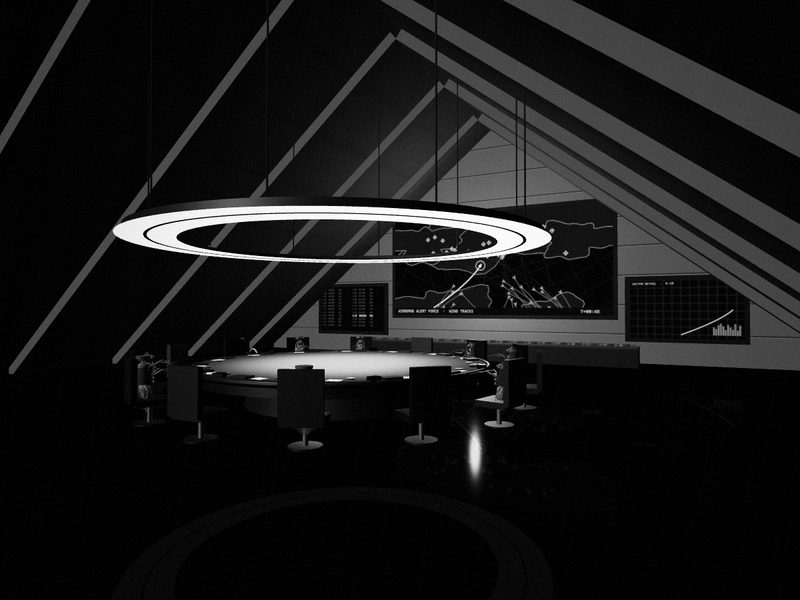
The fly sits at the War Room's round table as an aide, then becomes the B-52 commander who rides the released bomb toward a snowfield, in a procedural model of the sets of Dr. Strangelove (1964) populated entirely by flies.
Recording pending publication. Follow along for the release.
Setup
- Procedural sets based on Ken Adam's designs: a triangular concrete War Room with round baize table, suspended ring light, Big Board and buffet; a B-52 flight deck and bomb bay.
- Fourteen supporting flies: a president, Air Force general, ambassador, scientist, four Joint Chiefs and two aides at the table, plus a four-fly bomber crew.
- Ten cues over 130 seconds: assembly, the Big Board, recall, cockpit, low-level run, jammed bomb-bay doors, release, the bomb ride, a white flash and clouds on the horizon.
- Eight cameras, including flight-deck, chase, bomb-bay and bomb-ride tracking views.
- A Film monochrome toggle (on by default) applies a display-only black-and-white grade.
Measurement
- During playback the connectome model receives retinal input only, through the shared live-retina path.
- Bomber tracks, flight path, bomb motion, movement of the other flies and the ending clouds are pre-programmed.
- The monochrome grade does not alter the canonical eye image.
Limitations
- No footage, dialogue or soundtrack from the film is included.
- The flash shows light only, not destruction; the ending clouds are simplified approximations.