
README
Media Observation
experimentNo. 0001categoryFilm & mediarecordingpendingdataCC BY 4.0
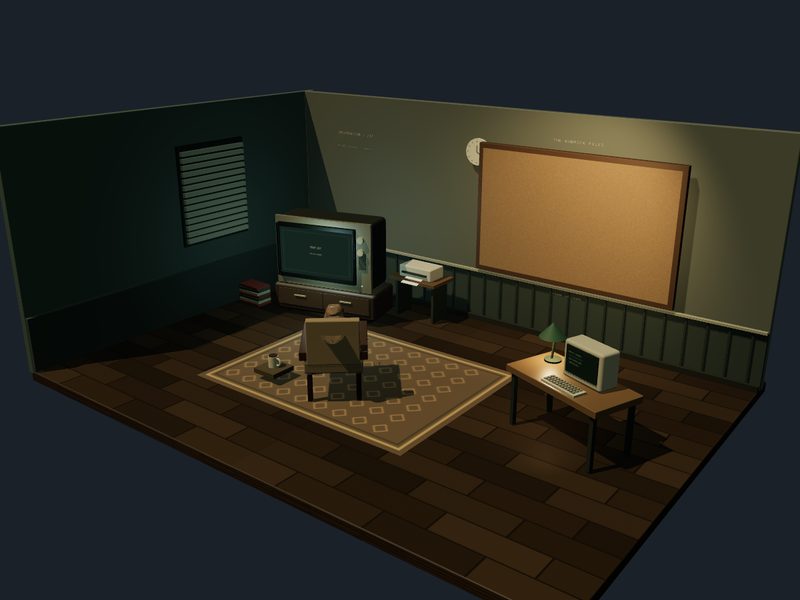
The fly watches a film on a television, works at a research computer and pins timestamped frame evidence and red string to a corkboard when a measured neural response crosses a set threshold.
Recording pending publication. Follow along for the release.
Setup
- A room with a television, research computer and corkboard; four cameras: room, fly, television and board.
- Films are prepared locally by FFmpeg into seekable H.264/AAC copies up to 1280x720. Originals are never modified.
- Timestamped subtitles and annotation tracks supply cue timing and note text. Evidence frames carry decoded frame times from the actual media file.
- Human review confirms, rejects or retains each observation. Optional web research supplies leads only, not confirmed observations.
Measurement
- Every 250 ms, television pixels or a render from the fly's head are reduced to 32 luminance columns that drive the model's photoreceptors.
- Timed cues stimulate LC10a and LC4/LPLC2 through the engineered movie-cues-v1 encoder. Over 700 ms of model time, mean DNa02 rate plus 0.25 x DNp01 rate is compared with a threshold to request a board visit.
- Head gestures, walking destinations and the pinning sequence are pre-programmed animations. Task stimulation of walking and foreleg motor cells is labelled in the interface.
Limitations
- The model does not understand films or read websites. Notes, tags, frame selection and evidence memory are external to the brain model.
- Cue kinds such as warmth, threat and anomaly are external narrative labels, not identified fly emotions.
- Automatic sampling can miss brief details; it is not an exhaustive continuity checker.
Sources
No external sources are cited for this experiment.