
README
The Star Gate
experimentNo. 0056categoryFilm & mediarecordingpendingdataCC BY 4.0
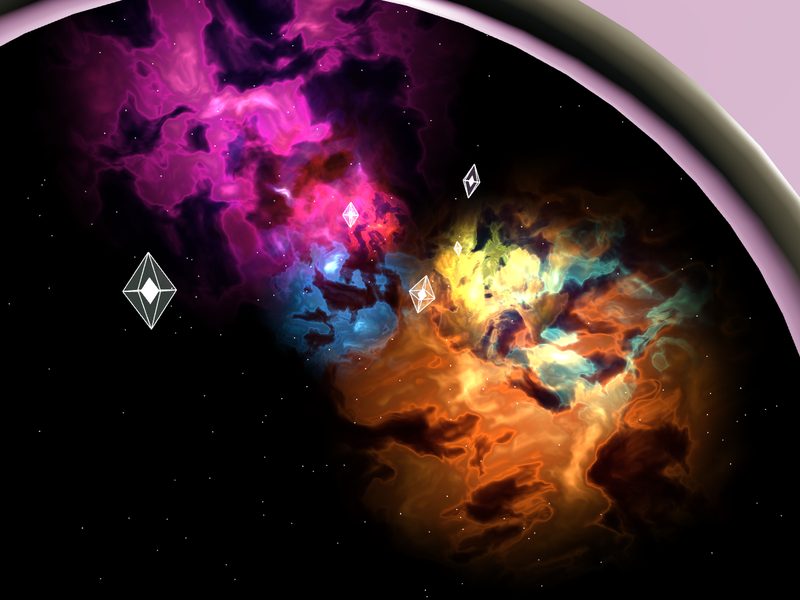
The fly rides a small white pod through slit-scan light planes, nebulae and false-colour landscapes into a lit-floor bedroom while horizontal-motion, vertical-motion and looming populations are measured.
Recording pending publication. Follow along for the release.
Setup
- Eight cues over 146 seconds: Jupiter and a drifting monolith, a horizontal-plane corridor, nebulae and jewels, a vertical-wall corridor, colour-filtered landscapes, arrival, the lit floor and the monolith at the foot of the bed.
- Corridor speed control from 0.25x to 3x; light planes follow the timeline or are fixed as horizontal, vertical or a four-sided tunnel.
- In the bedroom the subject passes an older fly dining alone; an even older fly reclines in the bed.
- Six cameras: pod over-the-shoulder, facing the fly, compound-eye close-up, corridor wide, bedroom and monolith.
Measurement
- The model receives 10-frame retinal sequences: one 32-column frame for each 20 ms step.
- Measured readouts during playback: horizontal motion (HS + H2), vertical motion (VS) and looming (LC4 + LPLC2).
- The journey and all scene motion are pre-programmed.
Limitations
- Only 32 column luminance averages reach the model; vertical structure and colour never do. Horizontal planes mainly create vertical image motion, which this retina largely discards.
- Light planes, nebulae, jewels, landscapes and the bedroom are shader and mesh approximations. No film footage, artwork or soundtrack is reproduced.