
Parting of the Red Sea and the Walls of Water (Exodus 14)
experimentNo. 0079categoryRituals & ceremoniesrecordingpendingdataCC BY 4.0
The fly crosses the Red Sea on dry ground between walls of water about 30 m high, following the text of Exodus 14 from the camp at Pi-hahiroth to the return of the sea over Pharaoh’s six hundred chariots.
An eight-second loop from the workstation. Full recording pending publication. Follow along for the release.
What the fly saw
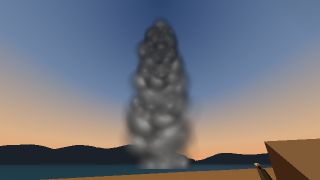
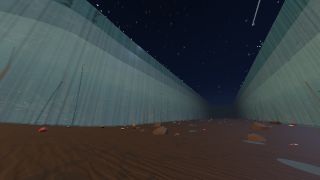
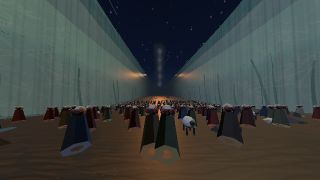
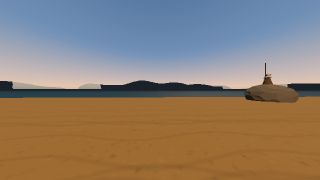
Frames rendered from the fly’s eye camera at four points in the timeline, each with the 32-column retinal input the connectome model receives at that moment.
Timeline
13 steps, with their times in the experiment
- 0:00Encamped by the sea
Late afternoon at Pi-hahiroth, “between Migdol and the sea” (14:2). Tents of the fly Israelites line the shore and the pillar of cloud stands before the camp.
- 0:10Six hundred chosen chariots
Dust rises on the western desert. Pharaoh drives at the head of “six hundred chosen chariots” (14:7) and the column bears down on the camp.
- 0:22The pillar moves between the camps
The pillar of cloud moves from before the camp and stands behind it, between the two hosts: “a cloud and darkness to them, but it gave light by night to these” (14:20). Night falls.
- 0:34Moses stretches out his hand
Moses climbs the rock at the waterline and stretches out his hand with the rod over the sea (14:16, 14:21). Aaron and the fly watch from the beach.
- 0:44A strong east wind all that night
Wind streaks across the water. Starting at the far shore, the sea splits along a line toward the camp, heaps up on both sides and drains from the seabed (14:21).
- 0:58The waters were a wall
The fly steps down onto the wet seabed. “The waters were a wall unto them on their right hand, and on their left” (14:22): about thirty metres of standing water, backlit by the pillar of fire.
- 1:14On dry ground
Mid-sea. The host of Israel walks on between the walls with its sheep. The fly reaches toward the left wall; the surface ripples and a shark turns away inside the water.
- 1:28The Egyptians follow
Far behind, the chariots charge down the beach and into the corridor after them (14:23). The fly looks back down the seabed toward the fire.
- 1:40They drave them heavily
In the morning watch the pillar of fire hangs over the chariots. Wheels come off and roll away; the cars drag on their axles, horses rear and the drivers turn to flee (14:24–25).
- 1:52Stretch out thine hand again
The fly climbs out onto the eastern beach. Dawn lights the sky as Moses stretches out his hand over the sea a second time (14:26–27).
- 2:00The sea returned to his strength
Beginning at the eastern shore, both walls lean in and crash together. The collapse runs west along the corridor and overtakes the fleeing chariots (14:27–28).
- 2:12Covered the chariots
The sea churns white and stained. Wheels, cars and the bodies of the drivers float where the corridor was (14:28).
- 2:22Dead upon the sea shore
Morning. Egyptian flies lie on their backs along the waterline among the wreckage, legs in the air (14:30). Israel stands on the beach and the fly walks along the line of bodies.
Setup
- 13 seekable stages over 156 seconds: encamped by the sea, six hundred chosen chariots, the pillar moves between the camps, Moses stretches out his hand, a strong east wind all that night, the waters were a wall, on dry ground, the Egyptians follow, they drave them heavily, stretch out thine hand again, the sea returned to his strength, covered the chariots, and dead upon the sea shore.
- One scene unit equals one metre. The fly stands about 1.3 m upright; the dry corridor is 40 m wide and 360 m long, and the two walls collapse over seven seconds, starting at the eastern shore and running west.
- Moses, Aaron, Pharaoh and an Egyptian captain are articulated fly figures. Pharaoh’s gilded chariot leads 600 instanced chariots 12 abreast, and an instanced host of Israel walks between the walls with its sheep.
- Controls: Wall height 15–45 m (default 30), Host of Israel 150–900 figures (default 600), Marine life in the walls (fish, rays, sharks and seaweed; default on), Gore (Low / Standard / Extreme, default Extreme) and Blood (cinematic red, default, or fly hemolymph). Gore scales the splatter where the sea strikes the chariots, the stain in the returned water and the pools under the drowned.
- Eight cameras: director, follow the fly, the seabed between the walls, the sea from above, the fly eye in first person, the camp at Pi-hahiroth, the eastern shore looking back, and a camera that tracks the Egyptian captain’s chariot. A replay control restarts at “The waters were a wall”.
Measurement
- Retinal-only input: the eye camera’s 32 luminance columns reach the fixed connectome model, measured spikes drive the neural display, and no direct stimulation is sent.
- Night, dawn, the moon and the pillar of fire are world lighting that darkens lit materials for the eye; spray, whitewater, the pillar and dust are scene content. Display presets, viewport fog, the viewport’s host-light dimming and cue text never reach the eye image.
- Looming (LC4 + LPLC2) and escape (DNp01) readouts report the fixed model’s measured response to that image.
- The parting, the crossing, the chariots and the collapse follow a pre-programmed timeline; measured spikes do not move the fly.
Limitations
- The locations of Pi-hahiroth, Migdol, Baal-zephon and the crossing are disputed (the Gulf of Suez, the Bitter Lakes, Lake Timsah, Lake Sirbonis and the Gulf of Aqaba have all been proposed), and the Hebrew yam suph is often rendered “sea of reeds”; the landforms are generic.
- Exodus gives no wall height, corridor width or length, order of parting and collapse, or timing, and does not describe the pillar’s appearance, the moon or any marine life; true kelp does not grow in the warm Red Sea, so the seaweed strands are a visual addition.
- Exodus 14 does not say whether Pharaoh entered the sea; he appears only in the pursuit.
- Time is condensed with cuts: the advance of the host and of the chariots jumps between stages.
- The chariots loosely follow the New Kingdom pattern (six-spoked wheels, two horses, plumes); they and the horses are low-poly instanced figures, not reconstructions.


