
Mevlevi Sema (Whirling Dervish Ceremony)
experimentNo. 0059categoryRituals & ceremoniesrecordingpendingdataCC BY 4.0
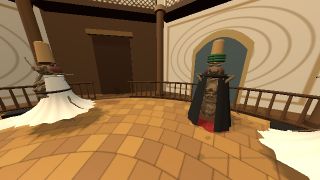
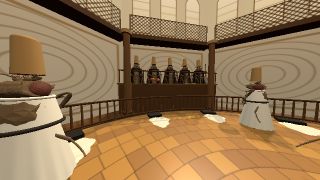
The fly, one of nine fly semazens, turns through the four selams of the Mevlevi sema, the whirling dervish ceremony of Konya; its eye turns with its body, so the images reaching the connectome model carry rotational optic flow.
An eight-second loop from the workstation. Full recording pending publication. Follow along for the release.
What the fly saw
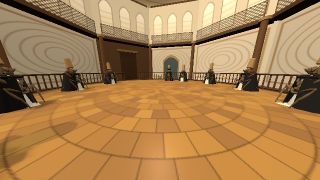
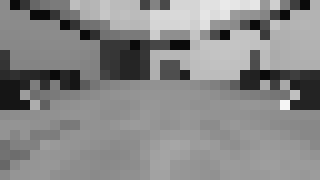
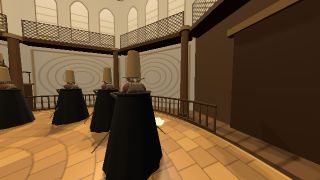
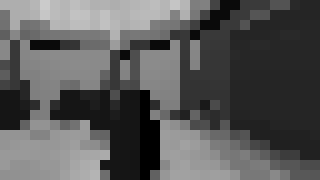
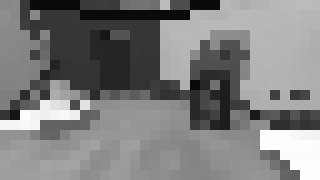
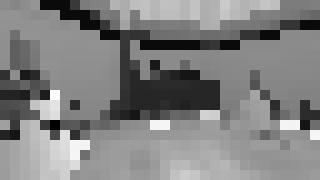
Frames rendered from the fly’s eye camera at four points in the timeline, each with the 32-column retinal input the connectome model receives at that moment.
Timeline
12 steps, with their times in the experiment
- 0:00Entering the semahane
One after another the semazens enter in black hırkas with arms folded, bow toward the red post and kneel on white sheepskins. The sheikh enters last, bows to the post, the musicians and the semazens, and walks the line to the post.
- 0:36Naat-ı Şerif
The naathan sings the eulogy of the Prophet (words attributed to Rumi, melody to Itri). The semazens kneel with heads bowed.
- 0:52The kudüm
A single strike of the kudüm, understood as the divine command “Be!”.
- 0:58Ney taksim
An improvisation on the reed flute, understood as the breath that gives life to everything.
- 1:14Devr-i Veledî / the Sultan Veled walk
With the first beat of the peşrev all bow, touch the floor and rise. Led by the sheikh they circle the hall three times, counter-clockwise; at the post each turns and bows to the one behind before crossing the line.
- 2:34The hırka is let fall / permission
The semazens let the black hırka fall, revealing the white tennure, and fold their arms on their shoulders. One by one they bow to the sheikh, kiss his hand and begin to turn.
- 3:00First selam
Turning on the left foot from right to left, each semazen opens the arms: right palm toward the sky, left palm toward the earth, the gaze on the left hand. The selam is understood as recognition of the Creator.
- 3:34Second selam
The semazens stop, fold their arms, bow toward the post and turn again: wonder at the order of creation.
- 4:04Third selam
The longest turning, understood as wonder transformed into love. The semazenbaşı walks among the turning semazens.
- 4:42Fourth selam / post semâı
The return to service. The sheikh leaves the post, walks the line to the centre and turns slowly; the semazenbaşı turns as well.
- 5:14Recitation
The semazens return to their places and are covered again by their hırkas. A hafız recites al-Baqara 2:115, on the East and the West belonging to God.
- 5:32Fatiha, prayer and Hu
The sheikh leads the Fatiha and the closing prayer; all answer “Hu”. The sheikh greets the assembly and leaves along the line, and the semazens withdraw in silence.
Setup
- Twelve seekable stages over 350 seconds, in the order of the Konya ceremony: entry, Naat-ı Şerif, the kudüm strike, the ney taksim, the Sultan Veled walk, the hırka let fall and permission from the sheikh, four selams, the recitation of al-Baqara 2:115, and the Fatiha and closing prayer.
- Sixteen flies: the sheikh, the semazenbaşı, nine semazens including the subject, and five musicians (naathan, neyzen, kudümzen, rebab and halile players).
- A simplified octagonal wooden semahane after the Galata and Konya halls, with a red post and white sheepskins, a balustraded floor, a latticed gallery, a shallow dome and a ring chandelier.
- In the Sultan Veled walk the line circles the hall three times counter-clockwise; in the selams the semazens turn from right to left on two rings that also advance around the hall, right palm up and gaze toward the left hand, with the tennure flaring as they turn.
- Controls: turning rate 20–60 rpm (default 36), an eye camera that turns with the body or is held to the hall, a viewport cutaway and a section selector. Seven cameras, including the semazen's first-person view.
Measurement
- Retinal-only input: the subject's eye turns with its body and renders ten 32-column frames 20 ms apart for each live window, so the retinal input carries rotational optic flow.
- The panel shows actual measured readouts of the fixed model's horizontal-motion cells (HS and H2) and heading cells (EPG) in response to those images; weights are not updated.
- Control condition: holding the eye camera's heading toward the post removes self-rotation from the retina while keeping the same hall and movement; in the workstation's browser test, frame-to-frame retinal change was about six times larger while turning than in the control.
- Turning, walking, bows and all other movements are pre-programmed; the panel's turn-rate and heading figures report the programmed motion, not a measurement.
Limitations
- No measured semazen turning rate was found in the cited sources; 36 rpm is a chosen default, and the relative tempo of each selam is a set value.
- No music, voice, recitation or calligraphy is reproduced, and the ceremony is condensed to just under six minutes.
- The model receives no vestibular signal; the readouts are responses to visual input only and do not model devotion, dizziness or balance.
- The sema is a living religious practice, inscribed on UNESCO's Representative List in 2008; the activity makes no claim about a spiritual state or effect, and shows the red post without asserting either meaning given in the sources.
- The hall, rings and fly postures are modeled approximations, not a survey of a specific semahane or recorded motion.


